Recently at my place of employment, I have been moved from the Italian food station to what they call "Whole + Sum". This area is what you would call the health food. At first I was a little hesitant about being moved there because who wants to cook and eat rabbit food, right? However, my executing chef helped me realize that there is more to it than meets the eye. The challenge is to make good food that is healthier for you. And if one is to grow professionally, one must take challenges head on and see them as opportunities. So, one of the first side dishes I made was the cumin roasted carrots with fresh mint and honey. It is an intriguing way of using carrots and quite tasty to boot.
The first thing I needed was carrots, lots and lots of carrots. Given that I work in a professional kitchen, all I had to do was ask my sous chef to order me some carrots. What he gave me were batonnet cut carrots. Now, if you can't find this cut at your local super market, you can always cut them yourself, or just another type of carrot. Baby carrots or sliced work well. Try to avoid matchstick carrots.
Next I gathered all the ingredients I would need. This included cumin, chopped garlic,
fresh mint,
honey, olive oil,
orange and lemon juice.
I chopped the mint and divided it into halves. One half I wold toss with the carrots before cooking and the other I would use as garnish after cooking.
Next, I took the juices, garlic, honey and half my mint, as well as the oil and made a sort of vinaigrette. I combined the first five ingredients and slowly whisked in the oil.
After I had my dressing, I tossed my carrots in it along with the cumin. After being tossed and dressed, the carrots went on a sheet pan and into the oven.
The carrots took about 20 - 25 minuets in the oven. When they came out, I panned them up and garnished with my reserved mint and they were ready for service!
The carrots are flavorful but low sodium and low fat. This is great way to eat your veggies. For those of you who want to do this at home, here is a simple recipe:
2 lbs carrots
2-3 cloves garlic, chopped
5 sprigs of fresh mint
1/4 cup olive oil
3 tbsp honey
1/4 cup orange juice
1/8 cup lemon juice
1-2 tbsp cumin
Prepare carrots by cutting them into whatever shape you would like.
Fine chop mint and separate into halves.
Mix garlic, half the mint, honey and juices. Slowly drizzle in olive oil while whisking until everything is incorporated and smooth.
Toss carrots with mixture.
Place carrots on a sheet pan and sprinkle with cumin evenly.
Roast carrots in a 350 degree oven for about 20 minutes. Check after 15.
Carrots should be tender, but not mushy. Some might have a light char on them, but they should not be burnt. If the carrots are not done, let them cook longer checking in 5 minute intervals.
Once the carrots are done, sprinkle with the other half of your mint.
Enjoy!
Wednesday, October 30, 2013
Saturday, October 19, 2013
Tango & Malbec
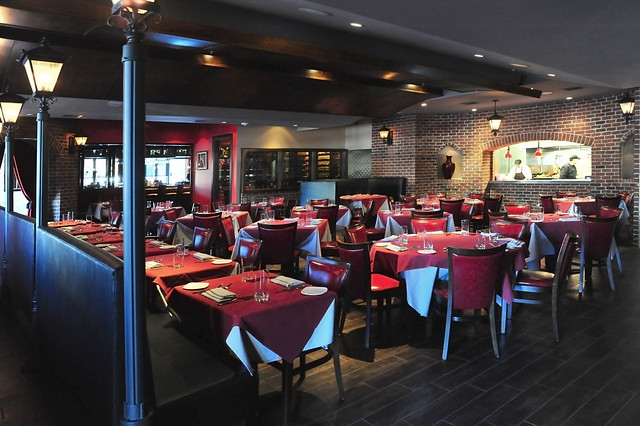
Two weeks ago was my wedding anniversary. So my wife and I decided to try a new restaurant. We had spotted Tango & Malbec a couple of times while driving through the Galleria area and were intrigued by its name. My wife is a big fan of malbec wines. Tango & Malbec is a South American steakhouse. While a little on the pricey side (special occasion type of restaurant), the food and atmosphere were well worth it. I did make reservations, but when we got there it did not seem as if we needed them. There was plenty of seating available. The dining area was warm and inviting. The lights were dimmed to set the perfect mood for a romantic night out. We were seated close to the open staging area. What I mean to say is there was a big opening where the waiter would pick up plates from the kitchen and we could look into and see the guys working over the grills.
The first thing that the waiter brought to our table was a bowl of different types of bread and house made chips with a smaller bowl of chimichurri sauce. The chips were exquisite. They were nice and crispy without being burnt or hard. The chimichurri was equally as good having a nice balance of tang from the vinegar, eathiness from the herbs, and sweetness from the sugar. They both played very well with each other. The bread was just your standard sliced baguette, some small bread sticks and some sliced parmesan bread. Good, but nothing spectacular.
While looking over the menu, my wife and I decided to order a bottle of wine. We got the Humberto Canale Estate '11, which is of course, a malbec. This was a very robust wine that was good right out of the bottle but really opened up once you let it breath a bit in your glass. Our waiter was also very good about keeping my wife's glass filled. I was taking my time with it, so I did not need as many fill ups. The wine also made for a fine accompaniment of our dinner.
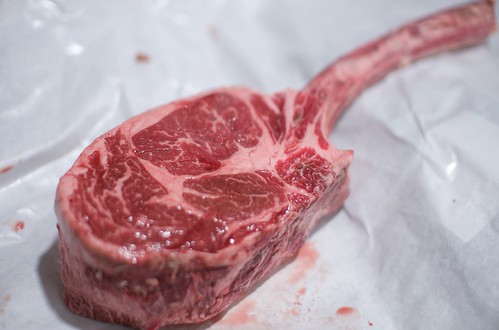
Before we placed our order, the waiter informed us of the specials for the night. The thing is, he did not just tell us about it, he showed us. An assistant and he brought forth a very large butcher's block filled with various types and cuts of meat ranging from a filet mignon, to a dry aged ribeye, to a couple of tomahawk steaks. In the end, we decided to order something off the menu.
As a started we decided to go with the ceviche. The ceciche was fresh fish and shrimp cooked in lemon juice and jalapenos and topped with some avocados and freshly made tortilla chips. The fish had a very fresh taste. It was very citrusy with some kick from the jalapenos. The shrimp had good flavor, but was a little rubbery as if it had be overdone slightly. Still, the ceviche was a nice way to start our meal.
For our main course, my wife and I decided to order the Como En El 50, which is a sort of sampler plate for two. It comes with skirt steak, lamb chops, tenderloin, short ribs, sausage and blood sausage as well as accompanied by grilled vegetables. My wife and I also decided to order a side of fried yuccca.
The meat was served on a metal served platter with hot coal underneath it and place in the middle of the table where my wife and I could serve ourselves. We were both given a plate with our accompanying vegetables.
The vegetables were prepared with the utmost care and respect they deserve. They were flavorful and tender without being mushy and overcooked. The yucca was also very good. It was the perfect starchy compliment to our mostly meaty meal. Like well made fries, the yucca was crispy on the outside and fluffy on the inside.
The meat, of course, was the star of this dinner show. Given so many options it was difficult to know where to start. We started with the black sausage. My wife was a little hesitant about it, but I told her to be adventurous. The sausage had a very mild flavor with an almost boudain like quality to it in texture. Next we moved on the the normal sausage which was also very good. Next I tried the tenderloin. It was cooked just as I like my meat, medium rare. The meat was very well seasoned, moist and tender. The flank steak was equally as good.
The two meat that really shined were the lamb chops and the spare rib. My wife described the lamb chop as possibly the best she's ever had. It was moist and tender without any gamyness to it. It was so good, we were both gnawing on the bone. We both know you are not really supposed to do that in public, but screw it. It was that good. The spare rib was incredible. The meat had a buttery quality that was beyond description. My only fault with it was that there was not more of it. There was, however, plenty of food to go around. My wife and I both had our fill and still had enough to take home to make steak and eggs for breakfast the next morning.
In just in case we were not stuffed to the gills on delicious meat, Tango & Malbec threw in a complimentary dessert. I had mentioned when I made our reservation that it was our anniversary, so I guess they decided to add some tres leches to our meal.
![]() |
| Not really a birthday. Unless you consider it our marriage's birthday. |
The tres leches was an unexpected, but pleasant surprise end to our dinner. As far as tres leches cakes go, it was above average. It was also a very good portion size. After having such a big meal, the cake was a perfect size for sharing with another person. My wife and I both got a taste, but it was not so much that we would feel sick after eating.
Tango & Malbec left a good impression with me. I enjoyed the food and the atmosphere and would definitely return. Given the possible hefty price tag, this will not be a place in heavy rotation of our favorite places to eat, but it will always come into consideration for special occasion meals.
Labels:
dinner,
Review,
South American,
steak
Location:
2800 Sage Road, Houston, TX 77056, USA
Tuesday, October 15, 2013
Omelette & Waffle Restaurant
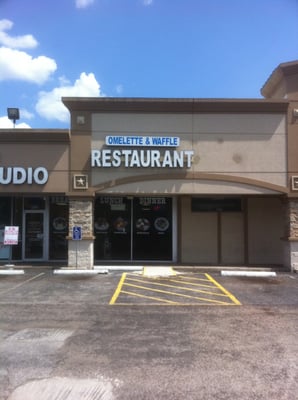
My wife and I first discovered this small, unassuming eatery shortly after it opened a couple of years back. The only problem is that is it so unassuming that we had really forgotten about it until this past Sunday. If you are looking for a nice little spot for breakfast or brunch, this place is it. Located in a strip mall and surrounded by various other store fronts, it is easily overlooked. But if you can get past the outside, you will find an unpretentious "mom and pop" restaurant with quick and friendly service as well as good food.
Omelette & Waffle Restaurant is the epitome of straightforward cafe style food. I mean, the name alone screams "SIMPLICITY" from the rooftops. The interior reflects the no nonsense directness of the restaurant. Always clean and tidy and with little frills, the restaurant has about 5 or 6 tables along with a counter. We were promptly greeted and seated and handed our menus.
I must note that Omelette & Waffle Restaurant does serve lunch and dinner options, but mainly I go there for breakfast/brunch. It is close to the house and serves perfectly for that Sunday after a late night or for whenever you just don't feel like dealing with the ordeal of making breakfast. First thing my wife and I ordered was coffee. You can't have a proper morning brunch without coffee. The coffee here was quite good. It was nice and strong without being overpowering or bitter. It was a pleasant proverbial kick to the senses. Our waitress was also very keen on keeping our mugs filled.
Now, given that omelette is in the name of the restaurant, you think I would have ordered one, but alas, such is not the case. I was tempted by something more basic on the menu and something that I truly love for breakfast. I chose to order on this morning the pancakes with eggs and bacon. Something a little simple, but I love pancakes so much that I will judge a place on the quality of its pancakes. That being said, let me start with the eggs and bacon. The eggs and bacon were served on a plate of their own so the pancakes could have a stage all to themselves. I order the eggs over easy and that is exactly how I got them. The whites were nice and cooked while the yolk was still soft and runny. The bacon was nice and crisp without being burnt. The surprise of this plate was the salsa. My plate included a small ramekin of homemade salsa and it was great. You could really tell that someone took care in making this salsa. It was flavorful with just a little bit of kick. It played really with with my eggs and bacon.
Next we come to the pancakes. The pancakes were very nice. They were served with warmed maple syrup and topped with some sliced strawberries and a dash of powdered sugar. It was just enough to take notice, but not so much that the pancakes would be confused with a snow topped mountain. The pancakes themselves were very tasty. They were, however, a little dense, almost like olde timey flapjacks. To me this was great. I liked them like that. I can see how this could be a detractor for others though. It all boils down to personal preference.
My wife decided that she wanted to try one of the daily specials. She ordered the chicken fried steak with eggs, hash browns and a half order of the Belgian waffle. She also received a ramekin of the homemade salsa.The chicken fried steak came with cream gravy and the eggs were cooked to order. If I remember correctly she ordered over easy as well. The eggs were cooked with the same precision as mine, so nothing to note there. The chicken fried steak was good, but nothing amazing really. The hash browns were quite good. Golden brown and crispy on the outside while being soft and tender in the middle and nicely seasoned.
Where Omelette & Waffle really shined was with... the waffle. It was one of the best waffles I have had in a long time. It was nice and crispy while still being light and fluffy. The warmed syrup only accentuated the flavor of the waffle. The waffle was topped with freshly whipped cream and strawberries and bananas. All together they danced and elegant waltz upon my palate I won't soon forget. Tasting the waffle can only lead me to one conclusion: if the waffles are this good, then the omelettes must be amazing as well. I look forward to coming back and exploring more of the menu.
Omelette & Waffle Restaurant is a fine neighborhood eatery. The problem might be that its reach might not extend past that. So if you ever find yourself in this neck of the wood, do yourself and favor and check out this place.
Omelette & Waffle Restaurant is the epitome of straightforward cafe style food. I mean, the name alone screams "SIMPLICITY" from the rooftops. The interior reflects the no nonsense directness of the restaurant. Always clean and tidy and with little frills, the restaurant has about 5 or 6 tables along with a counter. We were promptly greeted and seated and handed our menus.
I must note that Omelette & Waffle Restaurant does serve lunch and dinner options, but mainly I go there for breakfast/brunch. It is close to the house and serves perfectly for that Sunday after a late night or for whenever you just don't feel like dealing with the ordeal of making breakfast. First thing my wife and I ordered was coffee. You can't have a proper morning brunch without coffee. The coffee here was quite good. It was nice and strong without being overpowering or bitter. It was a pleasant proverbial kick to the senses. Our waitress was also very keen on keeping our mugs filled.
Now, given that omelette is in the name of the restaurant, you think I would have ordered one, but alas, such is not the case. I was tempted by something more basic on the menu and something that I truly love for breakfast. I chose to order on this morning the pancakes with eggs and bacon. Something a little simple, but I love pancakes so much that I will judge a place on the quality of its pancakes. That being said, let me start with the eggs and bacon. The eggs and bacon were served on a plate of their own so the pancakes could have a stage all to themselves. I order the eggs over easy and that is exactly how I got them. The whites were nice and cooked while the yolk was still soft and runny. The bacon was nice and crisp without being burnt. The surprise of this plate was the salsa. My plate included a small ramekin of homemade salsa and it was great. You could really tell that someone took care in making this salsa. It was flavorful with just a little bit of kick. It played really with with my eggs and bacon.
Next we come to the pancakes. The pancakes were very nice. They were served with warmed maple syrup and topped with some sliced strawberries and a dash of powdered sugar. It was just enough to take notice, but not so much that the pancakes would be confused with a snow topped mountain. The pancakes themselves were very tasty. They were, however, a little dense, almost like olde timey flapjacks. To me this was great. I liked them like that. I can see how this could be a detractor for others though. It all boils down to personal preference.
My wife decided that she wanted to try one of the daily specials. She ordered the chicken fried steak with eggs, hash browns and a half order of the Belgian waffle. She also received a ramekin of the homemade salsa.The chicken fried steak came with cream gravy and the eggs were cooked to order. If I remember correctly she ordered over easy as well. The eggs were cooked with the same precision as mine, so nothing to note there. The chicken fried steak was good, but nothing amazing really. The hash browns were quite good. Golden brown and crispy on the outside while being soft and tender in the middle and nicely seasoned.
Where Omelette & Waffle really shined was with... the waffle. It was one of the best waffles I have had in a long time. It was nice and crispy while still being light and fluffy. The warmed syrup only accentuated the flavor of the waffle. The waffle was topped with freshly whipped cream and strawberries and bananas. All together they danced and elegant waltz upon my palate I won't soon forget. Tasting the waffle can only lead me to one conclusion: if the waffles are this good, then the omelettes must be amazing as well. I look forward to coming back and exploring more of the menu.
Omelette & Waffle Restaurant is a fine neighborhood eatery. The problem might be that its reach might not extend past that. So if you ever find yourself in this neck of the wood, do yourself and favor and check out this place.
Thursday, September 26, 2013
Polenta's Potential Predicated
Polenta. What is it exactly? It sounds like something exotic and crazy. But really, it is such a simple dish that has the potential to be extraordinary! For those of you who grew up in the south, polenta is no more than Italian grits. Now I know some will cry out that "Grits and polenta aren't the same thing!" Well, yes and no. You see polenta and grits share some very fundamental and basic attributes. Polenta and grits are both essentially dried ground corn that is slow cooked in hot liquid to make a porridge like concoction. Both can be cooked with water alone, but we all know they are better with butter and cream. And both can be creamy and runny or as hard as mortar. The key differences are really what they are made of and what you put in them. Polenta is generally made with ground yellow cornmeal while traditional grits are made from hominy. Polenta has an Italian slant to it, meaning that any spices or seasoning as well as cheese added to it will be Italian. Grits usually are associated with Southern cuisine and served as a side dish with little to nothing added although cheesy grits are an exception.
Now that we have that comparison out of the way, lets talk more about polenta. At work I have become somewhat of an expert polenta maker. In fact, I had to save my sous chef's polenta when he was about to do a chef's table! That polenta turned out so well that one of our customers insisted on the recipe (provided below). Since I usually make large quantities and I usually make mine by feel and instinct, I had to sit down and think about it.
So what makes a good polenta? The first thing you have to know about polenta is how you want to serve it. As stated previously, polenta can be creamy and almost fluffy like good mashed potatoes, or nice and firm like a piece of cornbread. Knowing what you are going to do with your polenta before you start goes a long way to achieving that goal. Next, you have to let the polenta dictate how it will cook and how much you will need. As much as a recipe calls for certain amounts and times, it really comes down to how the food behaves and how you react to that. Lastly, good polenta takes fat and calories. It is difficult to make really good polenta that is low cal.
Here are a couple of tips and tricks for good polenta making:
When buying your ingredients, don't be fooled into buying fancy packages of "polenta mix". It is all just cornmeal. The cornmeal is just as good for about a third of the price.
Don't get cornflour. You generally want coarsely ground cornmeal. Cornflour is just really finely ground cornmeal. For whatever reason, I have found that it does not make for good polenta. It just ends up grainy.
Polenta will continue to cook even after you take it off the fire. That means it will get thicker. Take it off the heat a bit before your desired consistency. Keep in mind when you are adding your cheese that it will also add density.
If your polenta ever ends up too thick or dense, just add some hot liquid to loosen it up. At work I use hot water from the pasta machine.
If you are transferring your polenta to a serving dish, spray your dish and whatever utensils you are using to transfer with cooking spray. This makes serving it easier.
For firm polenta that can be cut into shapes, add enough cornmeal to make it difficult to stir, but not impossible.
When making polenta for cutting, make sure you spread it in your dish or baking pan before it sets. You can now cool it and save it for later. Once you are ready to serve it, you can reheat it by baking, grilling or searing it.
Polenta is versatile. You can add anything from mushrooms to sundried tomatoes. Get creative.
Recipe:
1 cup milk (2% works well)
1 cup cream
1/2 cup water
2-3 cloves of garlic minced (garlic powder works in a pinch)
3-4 tbsp Italian Seasoning or fresh herbs1/2 to 1 cup coarsely ground cornmeal (grits can serve as a substitute)
1/4 to 1/2 cup grated Parmesan or your favorite Italian cheese
1/4 to 1/2 stick of unsalted butter
Salt and Pepper to taste (if you can, use white pepper)
Mix your milk, cream and water in a sauce pan big enough to hold double the volume of the liquid.
Add your minced garlic to the liquid. You can also choose to add the dried herbs now, or wait until later. If using fresh herbs, it is best to wait.
Heat your liquids on medium high heat until they simmer. Do not allow liquid to boil over or scorch on the bottom.
Once the liquid is simmering, begin to add the cornmeal a little at a time slowly, whisking continuously to avoid lumps. As the cornmeal cooks it will thicken slightly. Once you have reached your desired thickness, lower the heat.
Add your cheese, butter, seasoning and herbs(if you have not done so already). Keep stirring the mixture until the cheese and butter are completely incorporated.
Serve and enjoy!
Now that we have that comparison out of the way, lets talk more about polenta. At work I have become somewhat of an expert polenta maker. In fact, I had to save my sous chef's polenta when he was about to do a chef's table! That polenta turned out so well that one of our customers insisted on the recipe (provided below). Since I usually make large quantities and I usually make mine by feel and instinct, I had to sit down and think about it.
So what makes a good polenta? The first thing you have to know about polenta is how you want to serve it. As stated previously, polenta can be creamy and almost fluffy like good mashed potatoes, or nice and firm like a piece of cornbread. Knowing what you are going to do with your polenta before you start goes a long way to achieving that goal. Next, you have to let the polenta dictate how it will cook and how much you will need. As much as a recipe calls for certain amounts and times, it really comes down to how the food behaves and how you react to that. Lastly, good polenta takes fat and calories. It is difficult to make really good polenta that is low cal.
Here are a couple of tips and tricks for good polenta making:
When buying your ingredients, don't be fooled into buying fancy packages of "polenta mix". It is all just cornmeal. The cornmeal is just as good for about a third of the price.
Don't get cornflour. You generally want coarsely ground cornmeal. Cornflour is just really finely ground cornmeal. For whatever reason, I have found that it does not make for good polenta. It just ends up grainy.
Polenta will continue to cook even after you take it off the fire. That means it will get thicker. Take it off the heat a bit before your desired consistency. Keep in mind when you are adding your cheese that it will also add density.
If your polenta ever ends up too thick or dense, just add some hot liquid to loosen it up. At work I use hot water from the pasta machine.
If you are transferring your polenta to a serving dish, spray your dish and whatever utensils you are using to transfer with cooking spray. This makes serving it easier.
For firm polenta that can be cut into shapes, add enough cornmeal to make it difficult to stir, but not impossible.
When making polenta for cutting, make sure you spread it in your dish or baking pan before it sets. You can now cool it and save it for later. Once you are ready to serve it, you can reheat it by baking, grilling or searing it.
Polenta is versatile. You can add anything from mushrooms to sundried tomatoes. Get creative.
Recipe:
1 cup milk (2% works well)
1 cup cream
1/2 cup water
2-3 cloves of garlic minced (garlic powder works in a pinch)
3-4 tbsp Italian Seasoning or fresh herbs1/2 to 1 cup coarsely ground cornmeal (grits can serve as a substitute)
1/4 to 1/2 cup grated Parmesan or your favorite Italian cheese
1/4 to 1/2 stick of unsalted butter
Salt and Pepper to taste (if you can, use white pepper)
Mix your milk, cream and water in a sauce pan big enough to hold double the volume of the liquid.
Add your minced garlic to the liquid. You can also choose to add the dried herbs now, or wait until later. If using fresh herbs, it is best to wait.
Heat your liquids on medium high heat until they simmer. Do not allow liquid to boil over or scorch on the bottom.
Once the liquid is simmering, begin to add the cornmeal a little at a time slowly, whisking continuously to avoid lumps. As the cornmeal cooks it will thicken slightly. Once you have reached your desired thickness, lower the heat.
Add your cheese, butter, seasoning and herbs(if you have not done so already). Keep stirring the mixture until the cheese and butter are completely incorporated.
Serve and enjoy!
Wednesday, September 25, 2013
Couscous and shrimp stuffed portabella mushrooms topped with a sauteed carrot and zucchini confetti
Just a simple recipe that my wife and I came up with one night for dinner.
Servings: 4
4 large portabella mushrooms
2 cups couscous cooked
1 lbs salad or cocktail shrimp
1/2 cup matchstick carrots
1/2 cup matchstick zucchini
3-4 tbsp olive oil for vegetables and as needed for the mushrooms
salt and pepper as needed
Remove the stems and gills from the mushrooms. Brush liberally with oil. Season with salt and pepper. Place mushrooms either in a hot saute pan, a griddle or in a 350 degree oven for about 10 - 15 min or until softened.
Cook your couscous according to the directions (bring 1 part water to 1 part couscous to a boil, add couscous to boiling water and turn off heat. Cover and let it stand until all the water is absorbed, usually about 5 min.) For extra shrimp flavor add a little shrimp bouillon to your cooking water.
If the shrimp is frozen, allow it to thaw, if raw throw it in the cooing water for the couscous. Once the couscous is cooked fluff it with a fork and toss it with the shrimp.
Using a mandolin, cut zucchini and carrots into matchsticks. If you don't have a mandolin, you can use a grater. You can also buy pre-cut carrots and cut the zucchini with a knife. Heat the 3-4 tbsp of olive oil in a saute pan and add your vegetables. Season with salt and pepper and cook until the vegetables become soft.
Take the couscous and shrimp mixture and stuff it into the concave side of the mushrooms. Top it off with your vegetable confetti and serve. You can actually prepare these in advance. Just allow everything to cool before assembling them. Once you are ready to serve them, just pop them into a 350 degree oven for about 15-20 min. or until they are warm.
Servings: 4
4 large portabella mushrooms
2 cups couscous cooked
1 lbs salad or cocktail shrimp
1/2 cup matchstick carrots
1/2 cup matchstick zucchini
3-4 tbsp olive oil for vegetables and as needed for the mushrooms
salt and pepper as needed
Remove the stems and gills from the mushrooms. Brush liberally with oil. Season with salt and pepper. Place mushrooms either in a hot saute pan, a griddle or in a 350 degree oven for about 10 - 15 min or until softened.
Cook your couscous according to the directions (bring 1 part water to 1 part couscous to a boil, add couscous to boiling water and turn off heat. Cover and let it stand until all the water is absorbed, usually about 5 min.) For extra shrimp flavor add a little shrimp bouillon to your cooking water.
If the shrimp is frozen, allow it to thaw, if raw throw it in the cooing water for the couscous. Once the couscous is cooked fluff it with a fork and toss it with the shrimp.
Using a mandolin, cut zucchini and carrots into matchsticks. If you don't have a mandolin, you can use a grater. You can also buy pre-cut carrots and cut the zucchini with a knife. Heat the 3-4 tbsp of olive oil in a saute pan and add your vegetables. Season with salt and pepper and cook until the vegetables become soft.
Take the couscous and shrimp mixture and stuff it into the concave side of the mushrooms. Top it off with your vegetable confetti and serve. You can actually prepare these in advance. Just allow everything to cool before assembling them. Once you are ready to serve them, just pop them into a 350 degree oven for about 15-20 min. or until they are warm.
Thursday, September 12, 2013
Epic Bar-B-Que of EPICNESS!!
Just in case you have not figured it out, I love to cook. I mean I really LOVE to cook. I especially enjoy preparing epic meals and having people over to share them with. There are a couple of times through out the year that this is especially true. (Thanksgiving and Mardi Gras) However, this year has been different. Due to some mitigating circumstances, I had not been able to cook and have a large get together. So when my wife asked if I wanted to have a bar-b-que over the Memorial Day weekend, I jumped at the chance. And given the fact that I had not done this all year, I wanted to make it a big blow out event. So I went all out. I cooked the better half of a barn as my wife likes to tell people. I decided to smoke a brisket, make slow cooker pulled pork, have smoked and grilled chicken and grill some sausage to round out the affair. To make life "easier", I just had guests bring things such as sides, drinks and various other accouterments.
In order to properly prepare for such an undertaking, you really have to start at least a day ahead of the event, if not several. If you count pre-purchasing all of the meat so that it would not be as big of a financial hit all at once, then I started several weeks ahead of time. In truth though, it was only about a couple of days that I began preparations. The first thing I did was take out some of the meat (such as the pork butt and whole chicken) from the freezer so that it could thaw out by the day of my BBQ. Next thing I did was procure the brisket and prepare it for smoking. I only really had to do this the day before. However, it is VERY important to not wait until the day of to prep. First of all, you really won't have time to prep the day of. (I will explain shortly.) Secondly, it helps the meat if you season it and allow it to marinate overnight. I used a wide breadth of spices and seasoning for all of my meats and sauces.
The day before I began cooking I started by trimming and seasoning my brisket. Essentially what I did was split the brisket into two pieces. I split the brisket to make it easier to smoke, give the meat more flavor, and reduce the cooking time. Every brisket has a vein of fat running through it. If you cut the brisket down this vein, you have what they call the fat cap(also called the point or deckle) and the flat. The flat has more meat and the fat cap has more fat. You don't want to trim off all the fat from the brisket, as this will dry out your meat in the smoker. You do want to trim off some of the fat, especially in places where it is thick or there is a big hunk. Once I trimmed my brisket, I seasoned it with my own rub which is a combination of salt, black pepper, white pepper, cayenne, garlic and onion powder, brown sugar, and paprika.
After the brisket is seasoned, I put it in an foil tray sealed with foil and let it sit overnight. The next day the brisket should have produce a little liquid in the tray. You want to save the liquid and the tray.
The day before I also seasoned and prepared the pork butt. My pork butt was not a hundred percent defrosted, but it was most of the way there. I cut the pork down into three smaller pieces since it did not fit into my crock pot. I also seasoned the pork with a similar rub to the brisket, adding a bit more brown sugar to this rub. To help the rub stick and to give the pork the smoky flavor of being in the pit while only cooking in the crock pot, I used some hickory flavored liquid smoke. Once the pork was seasoned and packed up in my crock pot I let is sit in the refrigerator overnight as well.
I also wanted to leave my pit/smoker ready for the next morning so all I had to do was get it going.
The next morning started out really early in the morning:
The reason you have to start so early is to get the pit/smoker going and to have enough time to let the meat properly smoke and cook. I try to get started about twelve hours before the event. After I woke up the first thing I did was start the fire. Once the fire got started I let it burn for about fifteen to twenty minutes so that I had hot coals and not flames. Flames will burn your wood faster than just hot coals.
After my coals were set, I added smoking chunks of hickory and mesquite. When I think of Texas BBQ, I think of the flavors of hickory and mesquite. I also use smoking chunks instead of chips because they provide a longer burn and plenty of smoke, which is perfect for a brisket.
Next I added my meat to the pit. Since my pit is a double compartment grill I put the meat on the opposite side compartment. This allows the meat to have indirect heat while still being immersed in smoke. Now remember how I said it was a good idea to save the foil pan and liquid form your brisket? Well, I used the foil pan as a drip pan collecting drippings and juices from the cooking meat and the juices have a bunch of flavor. If you are worried about raw meat juice, don't. It will be in a hot smoker for as long as the brisket is in there so it will cook.
The most important part of cooking with smoke is temperature control. That is why you need a good probe thermometer. Without it you won't know what your meat or pit is doing. Now, there are many good thermometers out there and a whole lot of different opinions on them. Personally I like a simple probe thermometer that I can leave in the meat and it will monitor the meat's temp as well as the the pit's. Once you have your meat and fire set up, you need to close up your pit and minimize the amount of time you open it until you are ready to pull out your meat.
So lets talk temperature. What is the ideal temperature for your pit? For me, I like to keep my pit at about 250 degrees. It is a little bit difficult, but that is my goal. At the very least I want to keep the temp above 200 if not 225. Why the large variance? Well, with my pit it is sometimes difficult to keep a steady temp. I check the fire and temp at least once per hour if not more often. I also have plenty of wood on hand to keep adding to the fire. This helps keep the temp up. It also helps that my pit is designed with opening doors that give access to the fire chamber directly so that I don't have to open the lid. Opening the lid quickly brings down the temperature of the chamber where your meat is. As for the temperature of the meat, you want your meat to be at an internal temperature of at least 190 degrees. Technically the meat is cooked at 160 degrees, but your meat will be tough and chewy. In other worlds, not sexy. You have to be patient with brisket and give it time to cook and get to that perfect state of tenderness. You also have to keep in mind that every piece of meat is different. So these temperatures are just guidelines. One brisket can be done at 180 degrees just as easily as another can not be done until 200.
Once I had my brisket going I really only had to check up on it and wait. The hardest part of all this is the waiting. I feel like I have to keep doing something and when I am not, I get anxious. At about 10 AM I started the pork. I put the crock pot on high and just let it cook until the meat became fork tender.
At that time I also seasoned my chicken for smoking. I just took a whole fryer and split it down the middle. I seasoned the bird with a rub made from salt, paprika, garlic powder, cayenne, red pepper flakes, dried thyme, dried oregano and brown sugar. After I seasoned the chicken I let it sit the refrigerator until it was time to smoke it. I did not season it the night before because given its smaller size, the chicken did not need all night for the flavor of the seasoning to really sink in. Add that to the limited space in my ice box and it was something that could wait until the day of.
Back to the brisket for a second. The brisket has been cooking all this time and I noticed that the temperature of the meat is rising steadily and a bit rapidly. In fact, it seemed that it was rising a little too rapidly. I was concerned that the meat would be done well before my guests arrived. Well, I had forgotten about the stall. You see when you are cooking brisket there comes a point, usually about 150 to 160 degrees, where the meat refuses to rise in temperature for hours on end. But why? There are many theories and explanations. But the one that makes the most sense, scientifically speaking, is that the stall is due to evaporative cooling. In other words, the same thing that happens to you when you are working out or doing yard work happens to a brisket. As moisture is released and evaporates, it prevents the brisket from rising in temperature.
Eventually the meat will pass the stall and begin rising in temp quickly. You have two choices when you hit the stall. You can choose to wait it out, or you can help it along with a "Texas crutch". A Texas crutch is essentially wrapping up your meat with foil so that the moisture escaping the meat does not have a chance to evaporate and therefore "cool" it. You can then leave it in your pit or finish it in the oven. When my brisket reached 160 degrees (about 2 hours before my guest were set to arrive), I took it out of my pit, placed it in the drip pan with all of the juices, sealed it up with more foil and placed it in a 300 degree oven. Some argue against the crutch while others sing its praises. I did this to ensure my meat would be done on time and to allow my to now use my pit to smoke my chicken. Once the meat reached about 200 degrees, I pulled it and let it rest.
While my brisket was finishing in the oven I added more wood to the fire, and proceeded to smoke my chicken, once again using indirect heat. About 45 minutes before my guest arrived I threw some pre-seasoned HEB BBQ leg quarters on the side of the pit with the fire so as to grill them. To finish off all the chicken I threw it in the oven just to finish cooking it off. After the chicken was done, I threw some sausages on the grill as well for good measure to complete my meat menagerie
Along with the meat I also made three different types of BBQ sauce. I made a Carolina style mustard based sauce, a Shiner Bock BBQ sauce and a traditional ketchup based sauce. The mustard based sauce I based on a recipe I found online with my own little tweaks. The Shiner Bock recipe I also found online. This one I followed a little more closely. For the traditional BBQ sauce I started with 3/4 of a bottle of ketchup, about a cup to a cup and half of the BBQ drippings form the brisket, salt, pepper, cayenne, two bay leaves, garlic powder, molasses, and brown sugar. I let all three sauces simmer until they were thickened slightly.
After all the meats were done, all that was left to do was to slice, chop and cut into serving pieces. I used the flat of the brisket for sliced while I used the point for chopped. The pork was nice and tender so all I had to do was pull it apart with some tongs. My wife also decided to make a Greek yogurt based cole slaw for the pulled pork. Everything came out smashingly, for lack of a better term. All my guest were properly fed. In fact some left with doggy bags. All in all I would call this BBQ a great success.
In order to properly prepare for such an undertaking, you really have to start at least a day ahead of the event, if not several. If you count pre-purchasing all of the meat so that it would not be as big of a financial hit all at once, then I started several weeks ahead of time. In truth though, it was only about a couple of days that I began preparations. The first thing I did was take out some of the meat (such as the pork butt and whole chicken) from the freezer so that it could thaw out by the day of my BBQ. Next thing I did was procure the brisket and prepare it for smoking. I only really had to do this the day before. However, it is VERY important to not wait until the day of to prep. First of all, you really won't have time to prep the day of. (I will explain shortly.) Secondly, it helps the meat if you season it and allow it to marinate overnight. I used a wide breadth of spices and seasoning for all of my meats and sauces.
The day before I began cooking I started by trimming and seasoning my brisket. Essentially what I did was split the brisket into two pieces. I split the brisket to make it easier to smoke, give the meat more flavor, and reduce the cooking time. Every brisket has a vein of fat running through it. If you cut the brisket down this vein, you have what they call the fat cap(also called the point or deckle) and the flat. The flat has more meat and the fat cap has more fat. You don't want to trim off all the fat from the brisket, as this will dry out your meat in the smoker. You do want to trim off some of the fat, especially in places where it is thick or there is a big hunk. Once I trimmed my brisket, I seasoned it with my own rub which is a combination of salt, black pepper, white pepper, cayenne, garlic and onion powder, brown sugar, and paprika.
After the brisket is seasoned, I put it in an foil tray sealed with foil and let it sit overnight. The next day the brisket should have produce a little liquid in the tray. You want to save the liquid and the tray.
The day before I also seasoned and prepared the pork butt. My pork butt was not a hundred percent defrosted, but it was most of the way there. I cut the pork down into three smaller pieces since it did not fit into my crock pot. I also seasoned the pork with a similar rub to the brisket, adding a bit more brown sugar to this rub. To help the rub stick and to give the pork the smoky flavor of being in the pit while only cooking in the crock pot, I used some hickory flavored liquid smoke. Once the pork was seasoned and packed up in my crock pot I let is sit in the refrigerator overnight as well.
I also wanted to leave my pit/smoker ready for the next morning so all I had to do was get it going.
The next morning started out really early in the morning:
![]() |
| That's AM! |
After my coals were set, I added smoking chunks of hickory and mesquite. When I think of Texas BBQ, I think of the flavors of hickory and mesquite. I also use smoking chunks instead of chips because they provide a longer burn and plenty of smoke, which is perfect for a brisket.
Next I added my meat to the pit. Since my pit is a double compartment grill I put the meat on the opposite side compartment. This allows the meat to have indirect heat while still being immersed in smoke. Now remember how I said it was a good idea to save the foil pan and liquid form your brisket? Well, I used the foil pan as a drip pan collecting drippings and juices from the cooking meat and the juices have a bunch of flavor. If you are worried about raw meat juice, don't. It will be in a hot smoker for as long as the brisket is in there so it will cook.
The most important part of cooking with smoke is temperature control. That is why you need a good probe thermometer. Without it you won't know what your meat or pit is doing. Now, there are many good thermometers out there and a whole lot of different opinions on them. Personally I like a simple probe thermometer that I can leave in the meat and it will monitor the meat's temp as well as the the pit's. Once you have your meat and fire set up, you need to close up your pit and minimize the amount of time you open it until you are ready to pull out your meat.
So lets talk temperature. What is the ideal temperature for your pit? For me, I like to keep my pit at about 250 degrees. It is a little bit difficult, but that is my goal. At the very least I want to keep the temp above 200 if not 225. Why the large variance? Well, with my pit it is sometimes difficult to keep a steady temp. I check the fire and temp at least once per hour if not more often. I also have plenty of wood on hand to keep adding to the fire. This helps keep the temp up. It also helps that my pit is designed with opening doors that give access to the fire chamber directly so that I don't have to open the lid. Opening the lid quickly brings down the temperature of the chamber where your meat is. As for the temperature of the meat, you want your meat to be at an internal temperature of at least 190 degrees. Technically the meat is cooked at 160 degrees, but your meat will be tough and chewy. In other worlds, not sexy. You have to be patient with brisket and give it time to cook and get to that perfect state of tenderness. You also have to keep in mind that every piece of meat is different. So these temperatures are just guidelines. One brisket can be done at 180 degrees just as easily as another can not be done until 200.
Once I had my brisket going I really only had to check up on it and wait. The hardest part of all this is the waiting. I feel like I have to keep doing something and when I am not, I get anxious. At about 10 AM I started the pork. I put the crock pot on high and just let it cook until the meat became fork tender.
At that time I also seasoned my chicken for smoking. I just took a whole fryer and split it down the middle. I seasoned the bird with a rub made from salt, paprika, garlic powder, cayenne, red pepper flakes, dried thyme, dried oregano and brown sugar. After I seasoned the chicken I let it sit the refrigerator until it was time to smoke it. I did not season it the night before because given its smaller size, the chicken did not need all night for the flavor of the seasoning to really sink in. Add that to the limited space in my ice box and it was something that could wait until the day of.
Back to the brisket for a second. The brisket has been cooking all this time and I noticed that the temperature of the meat is rising steadily and a bit rapidly. In fact, it seemed that it was rising a little too rapidly. I was concerned that the meat would be done well before my guests arrived. Well, I had forgotten about the stall. You see when you are cooking brisket there comes a point, usually about 150 to 160 degrees, where the meat refuses to rise in temperature for hours on end. But why? There are many theories and explanations. But the one that makes the most sense, scientifically speaking, is that the stall is due to evaporative cooling. In other words, the same thing that happens to you when you are working out or doing yard work happens to a brisket. As moisture is released and evaporates, it prevents the brisket from rising in temperature.
Eventually the meat will pass the stall and begin rising in temp quickly. You have two choices when you hit the stall. You can choose to wait it out, or you can help it along with a "Texas crutch". A Texas crutch is essentially wrapping up your meat with foil so that the moisture escaping the meat does not have a chance to evaporate and therefore "cool" it. You can then leave it in your pit or finish it in the oven. When my brisket reached 160 degrees (about 2 hours before my guest were set to arrive), I took it out of my pit, placed it in the drip pan with all of the juices, sealed it up with more foil and placed it in a 300 degree oven. Some argue against the crutch while others sing its praises. I did this to ensure my meat would be done on time and to allow my to now use my pit to smoke my chicken. Once the meat reached about 200 degrees, I pulled it and let it rest.
While my brisket was finishing in the oven I added more wood to the fire, and proceeded to smoke my chicken, once again using indirect heat. About 45 minutes before my guest arrived I threw some pre-seasoned HEB BBQ leg quarters on the side of the pit with the fire so as to grill them. To finish off all the chicken I threw it in the oven just to finish cooking it off. After the chicken was done, I threw some sausages on the grill as well for good measure to complete my meat menagerie
Along with the meat I also made three different types of BBQ sauce. I made a Carolina style mustard based sauce, a Shiner Bock BBQ sauce and a traditional ketchup based sauce. The mustard based sauce I based on a recipe I found online with my own little tweaks. The Shiner Bock recipe I also found online. This one I followed a little more closely. For the traditional BBQ sauce I started with 3/4 of a bottle of ketchup, about a cup to a cup and half of the BBQ drippings form the brisket, salt, pepper, cayenne, two bay leaves, garlic powder, molasses, and brown sugar. I let all three sauces simmer until they were thickened slightly.
![]() |
| Left to right: Traditional, Shiner, & Carolina BBQ Sauces |
![]() |
| Left to Right: Chopped &Sliced Brisket |
![]() |
| Smoked & Grilled Chicken and Grilled Sausage |
![]() |
| Crock Pot Pulled Pork |
Sunday, September 8, 2013
100% Taquito
Located off US-59 between Buffalo Speedway and Edloe Street, this little slice of truly authentic Mexican street food is one of the best places for tacos in Houston that is not found on four wheels. 100% Taquito's origins though are not that far off. It was originally started as a project form the University of Houston and began as a trailer in '96. Eventually it got a store front but kept the look and feel of a taco stand. The first thing you encounter when you enter 100% Taquito is that it is painted to look very much like Mexico City including a full sized Volkswagen beetle taxi cab very typical of the city.
The counter where you order your food has a facade made out to resemble food trucks.
!00% Taquito succeeds in providing a good place to eat.. The atmosphere there is always good with TV's showing music videos in Spanish or, as in the case this last time we went, having on Mexican soccer games. It is never too loud or too crowed so that you can actually have conversations with someone if you choose to eat there. There is also the option of taking stuff to go when you are on the run.
The menu of 100% Taquito is very simple. You have your five main types of food (tacos, quesadillas, sopes, tostadas, and tortas). Within each type of food you have about five or six variations depending on your filling. Also available are salads, some sides, desserts and some items that just don't fall under any of these classifications, such as the chicken mole with rice or the molletes.
Along with the food, 100% Taquito has a varied drink list. They have a wide choice of Mexican bottled sodas as well as your typical beers. They also provide juices and fruit slushies as well as some liquor based drinks such as sangria or margaritas. The chela-rita (a frozen margarita with a bottle of beer upturned in it) is always popular.
For tonight's dinner I choose to order the baderitas and the tacos mixtos. The banderitas are three chicken or beef flautas (tightly rolled tacos that have been fried) covered with red salsa, cream and queso fresco, and green salsa to form the Mexican flag.
The banderitas are excellent when you get them nice and hot. You kind of have to eat them right away otherwise the salsa will make them a bit soggy. While this does not affect the overall taste, it is a much better experience to eat the banderitas hot and crispy. The three different sauces also provide your palate with some nice variation as you eat them. The green salsa is tangy with some sour undertones. The cream and cheese provide a nice mellow and cooling contrast with the other two salsas, while the red has an earthy robust flavor.
The tacos come three small tacos to an order on corn or flour tortillas.The tacos mixtos are a basically a sampler of three different types of taco. They include a chicken mole, asada (beef fajita), and tinga (spicy chipotle brisket). All tacos come with freshly chopped cilantro and diced onions if you choose.
All of the meats are quite tasty. They are cooked only after you have ordered them so you can taste the freshness. The chicken mole is so good my wife has compared it to my mom's. The fajita meat is nice a tender and juicy. The brisket is moist and flavorful and not too spicy. These tacos are best when you add some fresh salsa and lime juice from the salsa bar.
My wife ordered the chicken mole sopes and the esquites (corn in a cup with cream and cheese). The sopes are essentially a thick corn tortilla with black beans, the chicken mole and topped with cilantro, onions and queso fresco. Think of sopes as a cross between tacos and tostadas. For me, nothing beats these with a little red salsa on top.
The esquites are a cup of roasted corn kettles mixed together with lots of cream, cheese and a spicy chile powder blend.. You can choose to have them with lime juice and a spicy chile powder blend. Since my wife does not like spicy stuff that much she opted to not have any.
The mixture of corn, cream and cheese is just exquisite. The flavor play very well with each other. This serves as a perfect side for any of the other options form the menu.
My wife and I also shared a small order of chicharrones (pork rinds). They were so fresh, they were still popping when they got to the table. We added a squeeze of lime juice and I added some Valentina hot sauce and were ready to go.
As far as drinks go, my wife ordered a glass of the sangria. The sangria is here is always very well made. They know how to get the right balance between acidity and sweetness. The wine is front and center but does not push back the natural fruit and juices.
I had two things to drink. I had a mangonada, which is a natural mango slushy with plenty of the spicy chile powder blend. If you have never tried it, there are many brands out there such as Tajin. The beauty of it is that it plays so well with the natural sweet and tangy flavors of the mango. The mangonada also comes with a Mexican spicy lolipop.
The last thing I had to drink was what they call a michelada. A michelada is a drink prepared from a beer that has various things added to it such as lime juice, salt, hot sauce and Worcestershire sauce. I will admit that this drink is not for the faint of heart and may not be up everyone's alley. But I like it. It is very refreshing and it gives a new twist to a frosty brew.
The thing that I most like about 100% Taquito, besides the authenticity, is that since the food is very inexpensive and comes in small enough sizes you can be bold and try different things very easily. So if you are ever in the mood for authentic Mexican street food, come check this place out.
The counter where you order your food has a facade made out to resemble food trucks.
!00% Taquito succeeds in providing a good place to eat.. The atmosphere there is always good with TV's showing music videos in Spanish or, as in the case this last time we went, having on Mexican soccer games. It is never too loud or too crowed so that you can actually have conversations with someone if you choose to eat there. There is also the option of taking stuff to go when you are on the run.
The menu of 100% Taquito is very simple. You have your five main types of food (tacos, quesadillas, sopes, tostadas, and tortas). Within each type of food you have about five or six variations depending on your filling. Also available are salads, some sides, desserts and some items that just don't fall under any of these classifications, such as the chicken mole with rice or the molletes.
Along with the food, 100% Taquito has a varied drink list. They have a wide choice of Mexican bottled sodas as well as your typical beers. They also provide juices and fruit slushies as well as some liquor based drinks such as sangria or margaritas. The chela-rita (a frozen margarita with a bottle of beer upturned in it) is always popular.
For tonight's dinner I choose to order the baderitas and the tacos mixtos. The banderitas are three chicken or beef flautas (tightly rolled tacos that have been fried) covered with red salsa, cream and queso fresco, and green salsa to form the Mexican flag.
The banderitas are excellent when you get them nice and hot. You kind of have to eat them right away otherwise the salsa will make them a bit soggy. While this does not affect the overall taste, it is a much better experience to eat the banderitas hot and crispy. The three different sauces also provide your palate with some nice variation as you eat them. The green salsa is tangy with some sour undertones. The cream and cheese provide a nice mellow and cooling contrast with the other two salsas, while the red has an earthy robust flavor.
The tacos come three small tacos to an order on corn or flour tortillas.The tacos mixtos are a basically a sampler of three different types of taco. They include a chicken mole, asada (beef fajita), and tinga (spicy chipotle brisket). All tacos come with freshly chopped cilantro and diced onions if you choose.
All of the meats are quite tasty. They are cooked only after you have ordered them so you can taste the freshness. The chicken mole is so good my wife has compared it to my mom's. The fajita meat is nice a tender and juicy. The brisket is moist and flavorful and not too spicy. These tacos are best when you add some fresh salsa and lime juice from the salsa bar.
My wife ordered the chicken mole sopes and the esquites (corn in a cup with cream and cheese). The sopes are essentially a thick corn tortilla with black beans, the chicken mole and topped with cilantro, onions and queso fresco. Think of sopes as a cross between tacos and tostadas. For me, nothing beats these with a little red salsa on top.
The esquites are a cup of roasted corn kettles mixed together with lots of cream, cheese and a spicy chile powder blend.. You can choose to have them with lime juice and a spicy chile powder blend. Since my wife does not like spicy stuff that much she opted to not have any.
The mixture of corn, cream and cheese is just exquisite. The flavor play very well with each other. This serves as a perfect side for any of the other options form the menu.
My wife and I also shared a small order of chicharrones (pork rinds). They were so fresh, they were still popping when they got to the table. We added a squeeze of lime juice and I added some Valentina hot sauce and were ready to go.
As far as drinks go, my wife ordered a glass of the sangria. The sangria is here is always very well made. They know how to get the right balance between acidity and sweetness. The wine is front and center but does not push back the natural fruit and juices.
I had two things to drink. I had a mangonada, which is a natural mango slushy with plenty of the spicy chile powder blend. If you have never tried it, there are many brands out there such as Tajin. The beauty of it is that it plays so well with the natural sweet and tangy flavors of the mango. The mangonada also comes with a Mexican spicy lolipop.
The last thing I had to drink was what they call a michelada. A michelada is a drink prepared from a beer that has various things added to it such as lime juice, salt, hot sauce and Worcestershire sauce. I will admit that this drink is not for the faint of heart and may not be up everyone's alley. But I like it. It is very refreshing and it gives a new twist to a frosty brew.
The thing that I most like about 100% Taquito, besides the authenticity, is that since the food is very inexpensive and comes in small enough sizes you can be bold and try different things very easily. So if you are ever in the mood for authentic Mexican street food, come check this place out.
Subscribe to:
Comments (Atom)